
Fix Spreading, Stickiness, Cookie blobs and Tough Dough
Sugar cookies are the tease of the cookie world.
The ingredients are simple. The instructions are straightforward if you’re using a good recipe.
But so much can go so wrong, ruining your ingredients and wasting your time.
Not to mention, potentially resulting in you showing up to holiday party, cookie swap or bake sale empty handed.
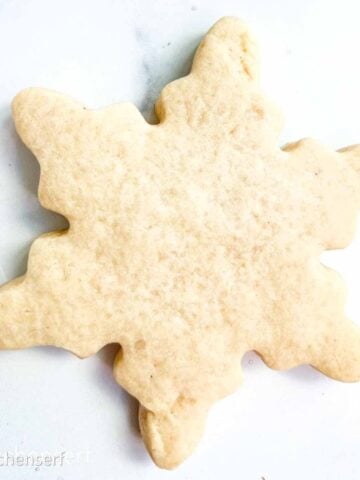
The best prevention trick is to bake one test cookie.
You’ll see exactly what you’re working with and you can usually fix problems before you commit to baking the whole batch.

No one wants that cookie loser feeling. You know, that you’re such a screw up you couldn’t even manage to bake cookies.
Prepping ahead? Here’s how to freeze cookie dough the right way.
Here are the biggest roll-out cookie troublemakers—and how to fix them.
Butter Temperature

Over-softened butter makes the dough sticky and causes spreading. Butter that’s too cold won’t cream properly and can make dough crumbly.
Start with butter that dents when pressed but still has some chill.
If it dents easily or looks greasy, it's too warm.
A digital thermometer, however, is best for checking butter temperature.
Room temperature butter is cooler than you think. See What is Room Temperature Butter?
My Dough Is Sticking to the Counter

If you didn't use enough flour or your butter was too warm or you used too much butter, your dough may stick to your counter.
Add a little more flour or cornstarch, one or two tablespoons at a time, checking the texture as you go.
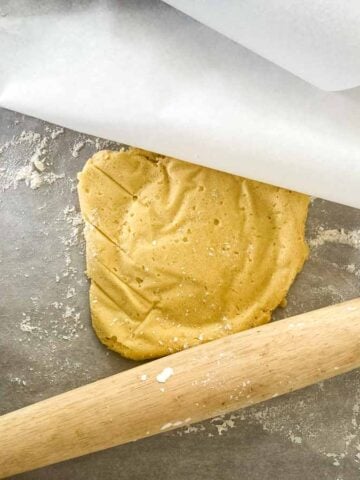
If your dough is naturally sticky, roll it out between parchment sheets.
After cutting shapes, lift the entire sheet and place it directly on the baking tray for clean transfer. No trying to peel it off a cookie spatula and having Santa's arm fall off mid-transfer.
You can also dust your cookie cutters with flour or my personal favorite, confectioner's sugar between cuts.
Mismeasuring Ingredients
Flour is the usual culprit too much makes cookies dry, tough and puffy; too little makes them thin.
Scoop straight from the bag and you’ll pack in too much.
For accuracy, spoon and level your flour.
Use actual measuring cups--not drinking water cups.
Or even better, use a kitchen scale. (I use and love this digital scale.)
You Used Too Large or Too Small Eggs
Use the egg size the recipe specifies. This is almost always large.
If you use extra-large instead, you’re adding too much liquid, which affects structure, bake time and spreading.
You Left Out An Ingredient

Measure and lay out all ingredients before you start mixing so you know you’re not missing sugar, salt, or that tablespoon of vanilla you swore you bought.
Old Ingredients
Stale flour, expired baking powder, or ancient vanilla will give you sad cookies. Check dates, especially leaveners.
Here's how to check if your baking powder is still good.
Overmixing
Overmixing develops gluten, and gluten is not the holiday vibe here. Overmix and you get tough, cardboard-adjacent cookies.
Undermixing
Undermixing leaves flour streaks or uneven dough that rolls out weird or doesn't bake right.
Cream butter and sugar fully, then mix in dry ingredients just until combined.
Cookie Dough Temperature
Roll-out dough is sensitive.
If your kitchen is warm, the dough softens too quickly and cookies spread.
If the dough is too cold, it cracks, crumbles, or refuses to roll.
Aim for dough that’s cool and pliable, not cold.
If Your Cookies Are Puffy, Misshapen Blobs
You probably used too much flour or accidentally left something out.
If Your Cookies Are Thin and Crunchy
You rolled the dough too thin or baked them too long. Cookies are small, even an extra minute can make the difference in just done and burnt.
A thickness of ¼ inch is the sweet spot for classic cut-outs.
If Your Cookies Spread and Lose Shape
If you're in crisis mode, shove the whole sheet pan in the freezer for 5 minutes before baking.
This is the holiday classic cookie problem and is usually caused by:
• Dough too warm
• Butter too soft
• Not enough flour
• Oven running hot
Fix it fast by chilling cut shapes on the tray for 10 minutes before baking.

If Your Edges Brown Too Fast
Move the tray to the center rack and use light-colored baking sheets. Dark pans heat aggressively and may over brown the bottoms.
Check your oven calibration.
How to Store and Freeze Cut-Out Cookies
Undecorated cookies freeze beautifully for up to 3 months.
Freeze unbaked dough shapes on a sheet pan first. Once frozen wrap the cookies in wax paper or plastic wrap. Then transfer the cookies to a sturdy, freezer safe container.
Decorated cookies should dry overnight before stacking to prevent smudging.


Heidi Stevenson says
Great advice. So informative. THANK YOU!
Jennifer Osborn says
I'm so glad to hear this Heidi! Thanks so much for letting me know!
Happy holidays!